JUnit
How to Write Custom Annotations as Meta Annotations in JUnit
Write composed annotations in JUnit 5 with meta annotations: combine tags, extensions and display names into reusable test annotations for cleaner test code.
6 min read
Everything you need to level up your coding skills.
Write composed annotations in JUnit 5 with meta annotations: combine tags, extensions and display names into reusable test annotations for cleaner test code.
Fix a Java container killed with OOMKilled and exit code 137 by budgeting heap, metaspace, threads and native memory inside the container limit.
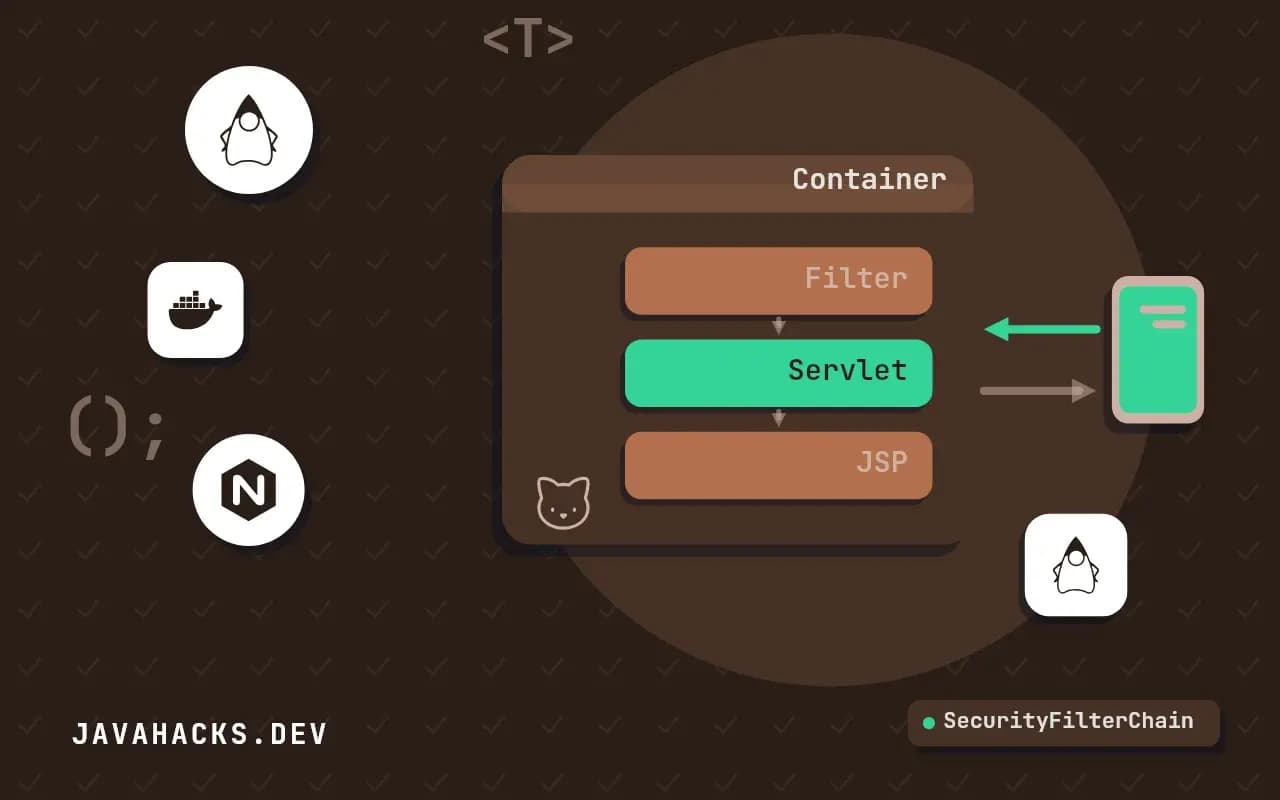
Accept file uploads in Struts 2 with size and type limits, safe file names and storage outside the web root, and know which settings and releases matter.
Fix the compile and resolution errors that follow a Play Framework or sbt upgrade, from the moved plugin group ID to the Akka to Pekko package change.

Fix the Micronaut no-bean error by enabling the annotation processor, annotating the class as a bean and checking the conditions that disable it.
Write a custom Vaadin Flow component: compose existing components, or wrap a web component with Tag, JsModule, properties, events and server calls.
Shrink a Java Docker image in six steps: drop the JDK, build in a stage, layer the Spring Boot jar, choose the base, trim dependencies and run non-root.
Why HikariCP reports that a connection is not available, how to tell a leak from a pool that is too small, and how to size the pool for the database.
Why ClassCastException appears where no cast is written, how raw types and unchecked warnings cause heap pollution, and how to fix it at the source.
Return RFC 9457 problem details from a Spring Boot API: ProblemDetail, ErrorResponse, a ControllerAdvice, extension members and enabling it globally.
Learn the order in which Spring Boot reads configuration: command line, environment, profile files, application files and defaults.
Understand the two causes of BeanCurrentlyInCreationException, a true dependency cycle and an early reference that later got wrapped in a proxy.
We send one email when a new post is published. No spam.