Spring FrameworkGuide
How Spring Container Works and Why Proxies Surprise You
Follow a bean from definition to proxy to destruction, and learn why scopes, proxies and transactions behave the way they do inside the container.
15 min read
Tag
99 posts
Follow a bean from definition to proxy to destruction, and learn why scopes, proxies and transactions behave the way they do inside the container.
Understand the Faces lifecycle, scopes, expression language and PrimeFaces components well enough to maintain and extend an existing application.
A complete guide to Java reflection: inspect and invoke classes, proxies, method handles, modules, performance, native image limits and when not to use it.
Learn how to start threads, wait for them, share results with futures and move to executors and virtual threads, with the rules that keep code correct.
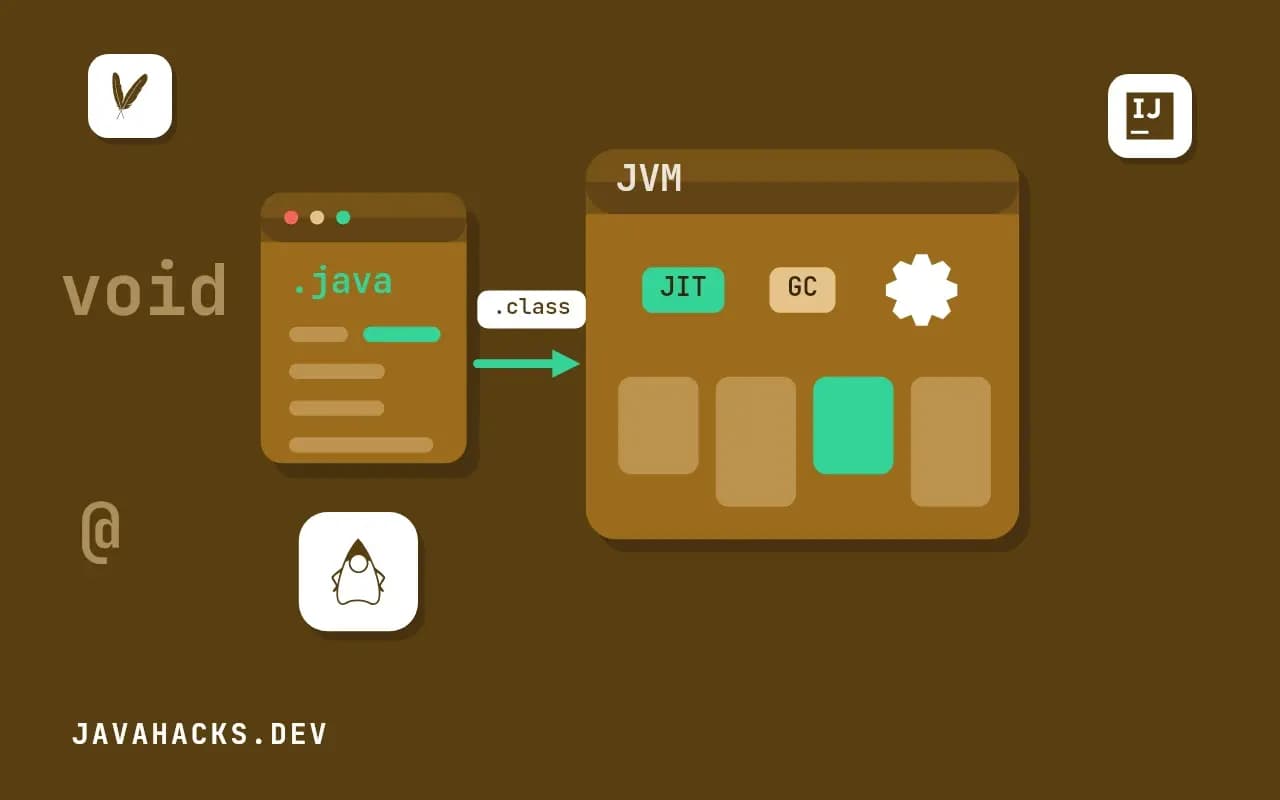
Follow Java code from source to bytecode, class loading, interpretation and JIT compilation, and see why the JVM is slow at first and fast later.
A short list of clean code rules for Java that survive contact with real projects: naming, small methods, immutability, exceptions and when to ignore a rule.
Spring Security lambda DSL explained: why and() chaining was replaced, how to write authorizeHttpRequests, formLogin and csrf with lambdas.
Size a HikariCP pool using the cores and spindles formula, Little's Law and measurement, and avoid the common mistakes of oversized pools.
Dependency injection means a class receives its collaborators instead of building them. See what that buys in tests and wiring, and what Spring adds.
Follow one HTTP request through filters, the DispatcherServlet, handler mapping, argument resolution, the controller and the response writer.
A short set of REST API design rules for Java teams: resources, verbs, status codes, errors, pagination, versioning and what to leave out until it is needed.
JPA is a specification and Hibernate is the implementation most Java projects use. See how the two relate to Spring Data and JDBC in a running application.